KNUBA’s Department of Cybersecurity and Computer Engineering will teach OSINT
The practical course “Fundamentals of Social Engineering and OSINT Technologies” will be taught at the KNUBA Department of Cybersecurity and Computer Engineering. This was stated by First Vice-Rector Oleksii Shkuratov during the signing of a memorandum with the OsintFlow team, which joined the…
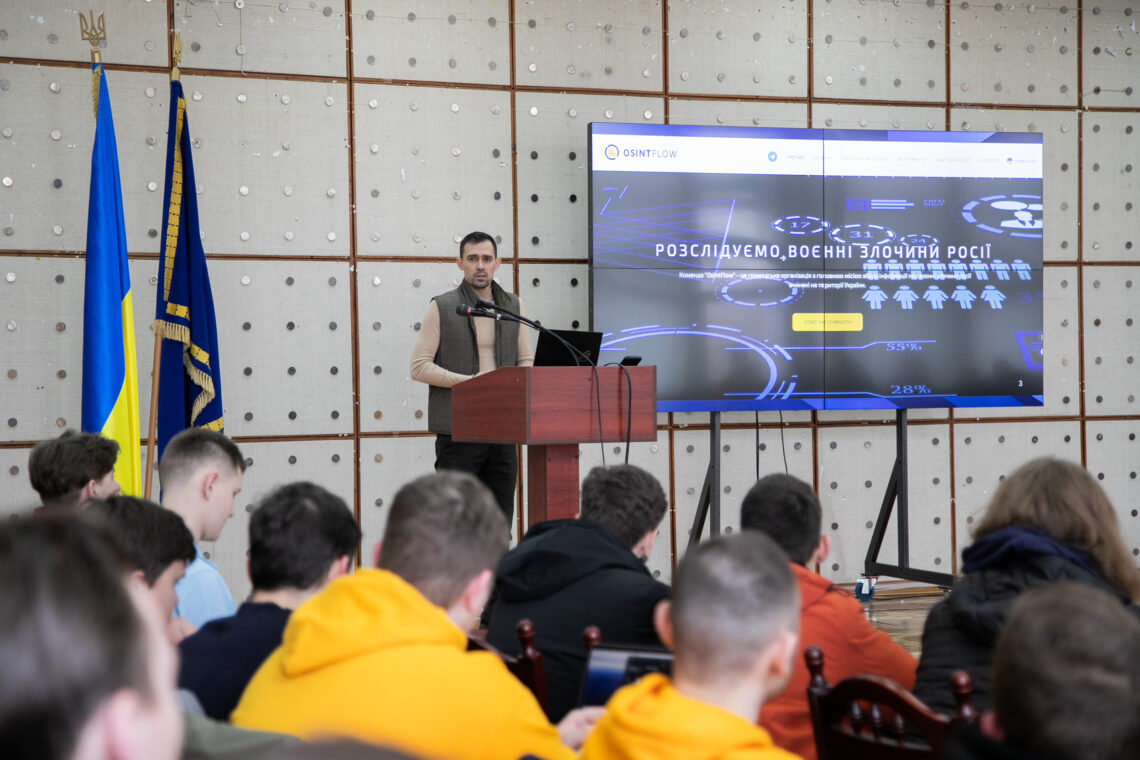
The practical course “Fundamentals of Social Engineering and OSINT Technologies” will be taught at the KNUBA Department of Cybersecurity and Computer Engineering. This was stated by First Vice-Rector Oleksii Shkuratov during the signing of a memorandum with the team OsintFlow, , which joined in developing the course.
“Today, the security and defense forces, as well as private companies, have a high demand for specialists who are proficient in OSINT tools, because effective analysis of open sources makes it possible to quickly obtain critically important information. That is why we involve practicing professionals in the educational process, so that students gain not only theoretical knowledge but also the practical skills needed to work in real conditions,” – noted Oleksii SHKURATOV.
According to Maksym DELEMBOVSKYI, Associate Professor at the Department of Cybersecurity and Computer Engineering, the subject will be taught as part of the educational programs “Computer Systems and Networks” and “Cybersecurity and Information Protection.”
He added that, as part of the cooperation with OsintFlow, KNUBA will hold open lectures on OSINT, hackathons and cybersecurity competitions (CTF). The first open lecture drew more than 70 participants.
OSINT (Open Source Intelligence) – is intelligence based on analyzing information from open sources: social networks, media, registries, databases and even metadata. It is one of the key tools in cybersecurity, investigations and threat analysis.
As a reminder, KNUBA specialists, together with the USAID Cybersecurity Activity, updated the educational program “Security of Information and Communication Systems,” adding to it elements of cyber protection for critical infrastructure and industry.


