Tourism during the war is not entertainment but an important tool of recovery.
Despite the war, Ukrainians continue to travel around Ukraine, and military personnel and veterans even more actively than the civilian population. These are the findings of the first national study of Ukrainians' travel behaviour during the full-scale invasion, “Tourism…
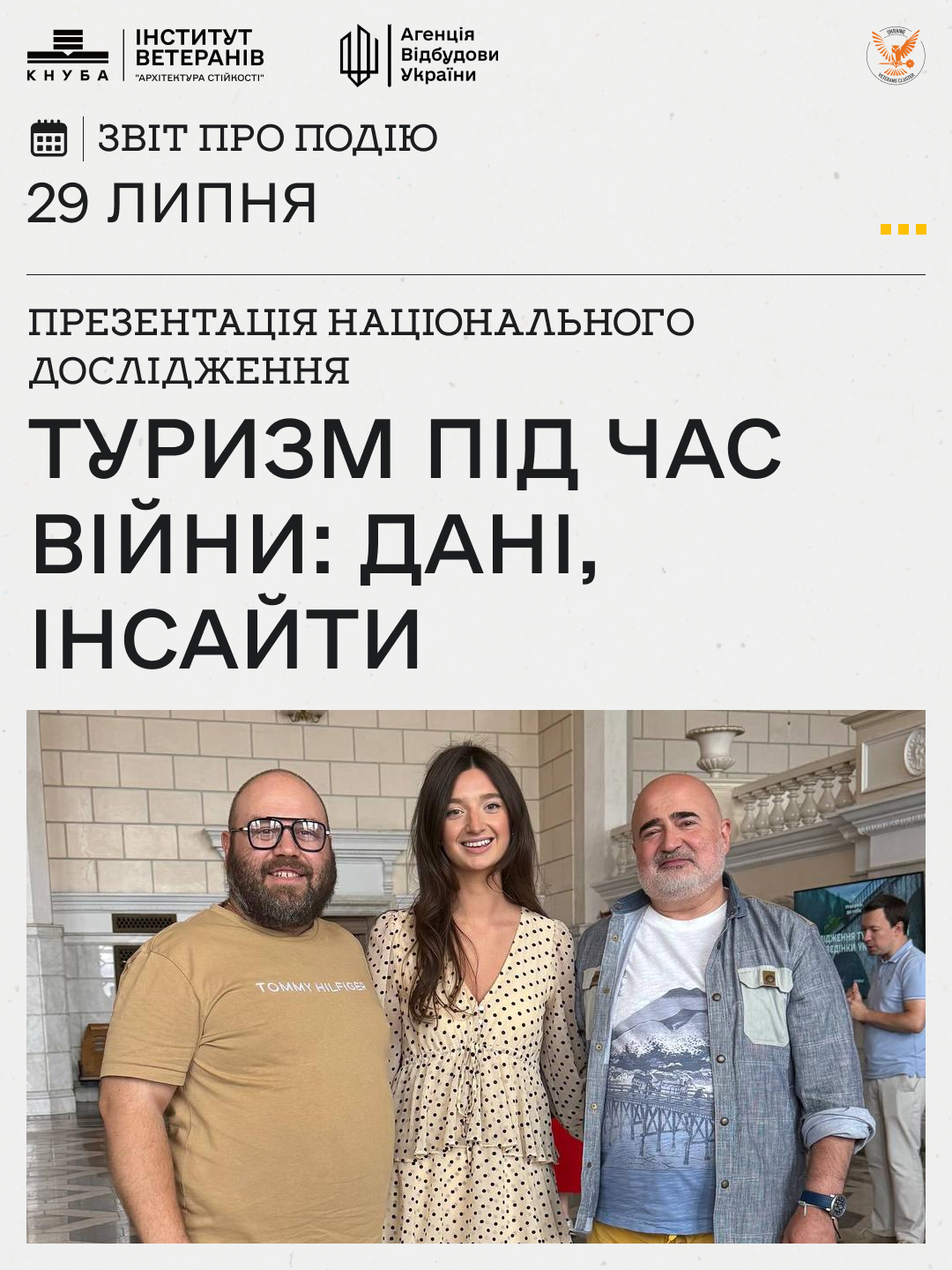
Despite the war, Ukrainians continue to travel around Ukraine, and the military and veterans do so even more actively than the civilian population.
These are the data of the first national study of Ukrainians' travel behaviour during the full-scale invasion, “Tourism in Wartime: Data, Insights”, which was presented in Kyiv on July 29.
The study was conducted by the sociological company Gradus on behalf of BRAND UKRAINE and the State Agency for Tourism Development of Ukraine (DART).
The event was also attended by Yevhen Komarov @evgeniy_k_official, deputy head of the Veterans Institute “Architecture of Resilience” at KNUBA, who is also a member of the Expert Council of the national programme “Journey to Oneself. Paths of Recovery”.
A study has shown that domestic tourism in Ukraine today is more than traditional leisure. Under wartime conditions, travel helps people recover emotionally, fosters social adaptation and supports mental health. 66% of Ukrainians consider travel appropriate during the war, and the same percentage made at least one trip around the country over the past year.
Travel as a form of rest is popular not only among civilians. Over the past year, 72% of service members and 69% of veterans travelled around the country. For the men and women who defend the country, tourism today is above all an opportunity to recover. Service members seek physical rehabilitation (47%), time with family (42%) and at least a brief distraction from thoughts connected with their service (35%).
At the same time, the study recorded challenges for the hospitality sector and the tourism industry. For service members, not only security barriers are critical but also social ones. In particular, 66% of respondents said that during rest and travel privacy and quiet are important to them — that is, without loud music or crowds.
33% of respondents said they feel discomfort because of the sharp contrast between civilian life and the reality of the front, and 30% that they feel awkward because of strangers' questions about their service.
These conclusions once again underline the importance of developing a barrier-free tourism space that is friendly to veterans.
Among the most popular destinations for recovery, Ukrainians name the Carpathians, the Kyiv region, Lviv and Odesa. Most trips last two to three days, and the most common format remains a family holiday in nature.
The KNUBA Veterans Institute “Architecture of Resilience” continues to join initiatives aimed at creating conditions for quality rehabilitation, social adaptation and integration of veterans.
#ArchitectureOfResilience #Veterans #TourismOfUkraine


