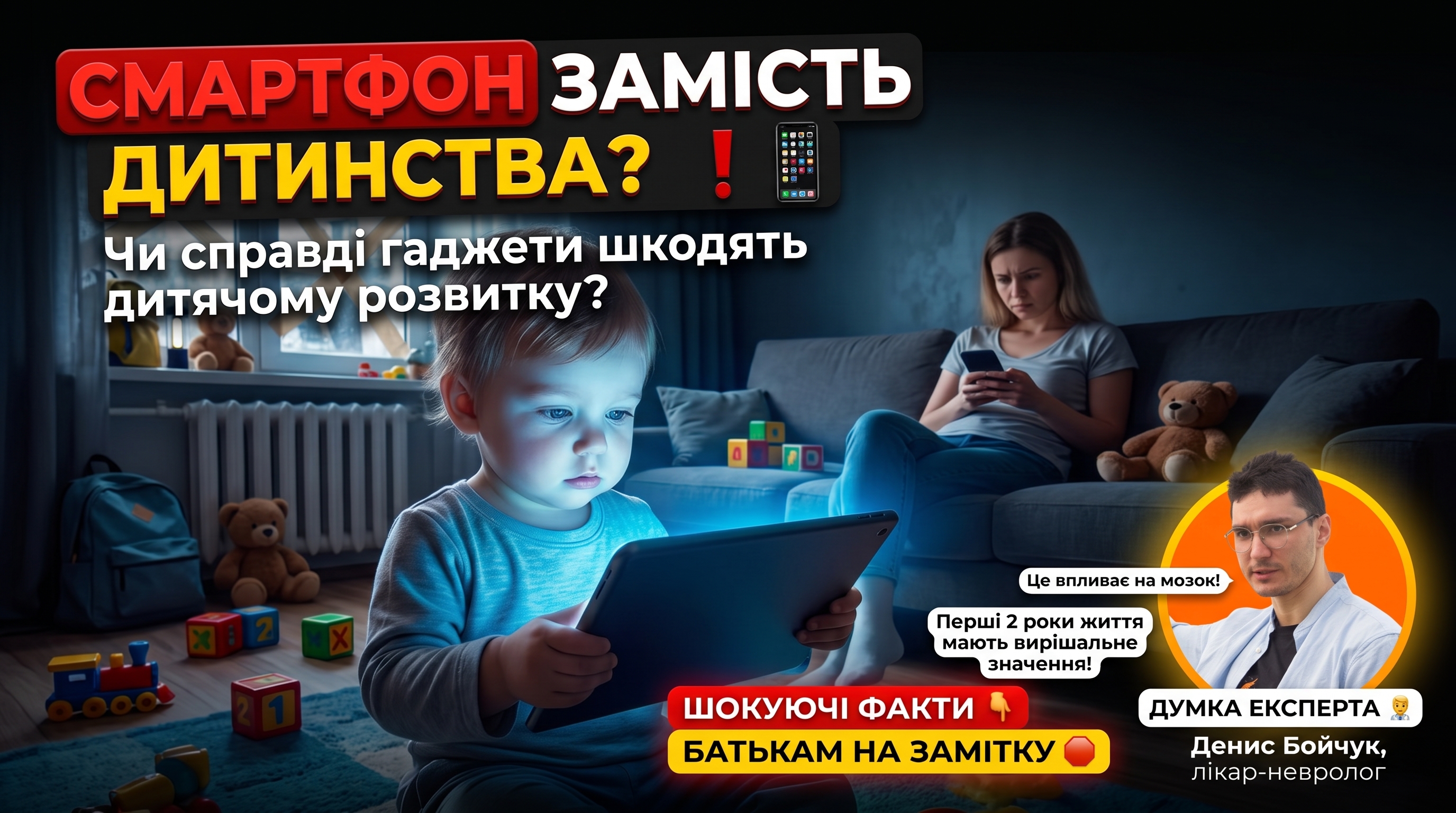
A smartphone instead of childhood: do gadgets really harm children's development?
Air-raid alerts, life between home and shelter, remote work and a constant flow of news have changed the everyday life of Ukrainian families — a gadget has become a familiar way to calm a child. Specialists warn that regular screen use can harm the development of children under two.
This is also confirmed by a large international study whose results were published by British scientists from four universities — Leeds, Leeds Trinity, Loughborough and Aston.
The researchers concluded that regular use of smartphones, tablets or other devices with screens by children under two is linked to potential long-term health risks. They therefore recommended avoiding altogether situations in which gadgets are deliberately switched on for infants on the principle of “let the child play, as long as it doesn't bother anyone”.
In recent years screens have become a familiar part of childhood. While parents work, deal with household matters or follow reports on the security situation, small children often spend their time watching cartoons or children's videos. Today gadgets are often used as a quick way to distract or calm a child.
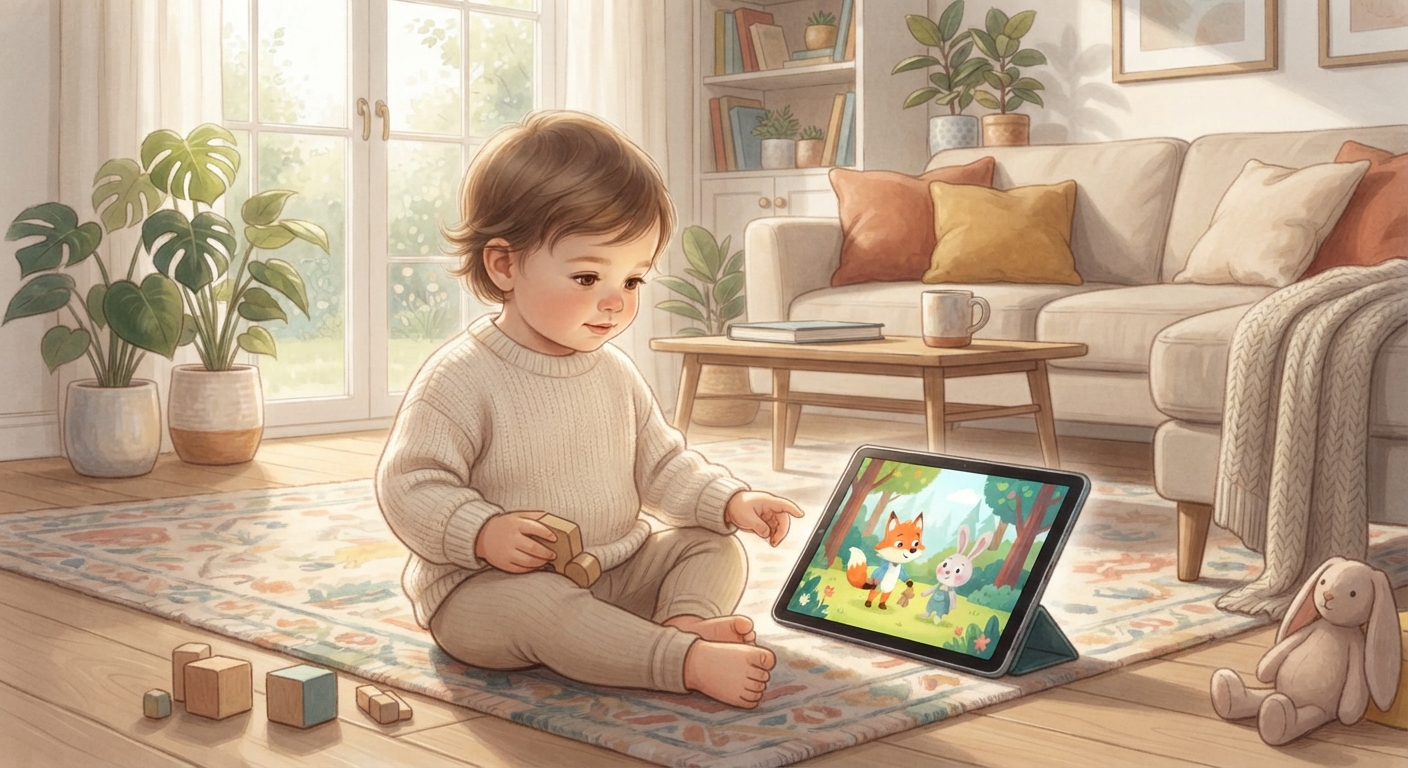
Scientists warn that gadgets take away the chance of live contact with parents, limit a child's physical activity and even affect speech development. According to the study, the main risks also include sleep problems, overstimulation of the nervous system, a possible effect on eye health and an increased risk of childhood obesity.
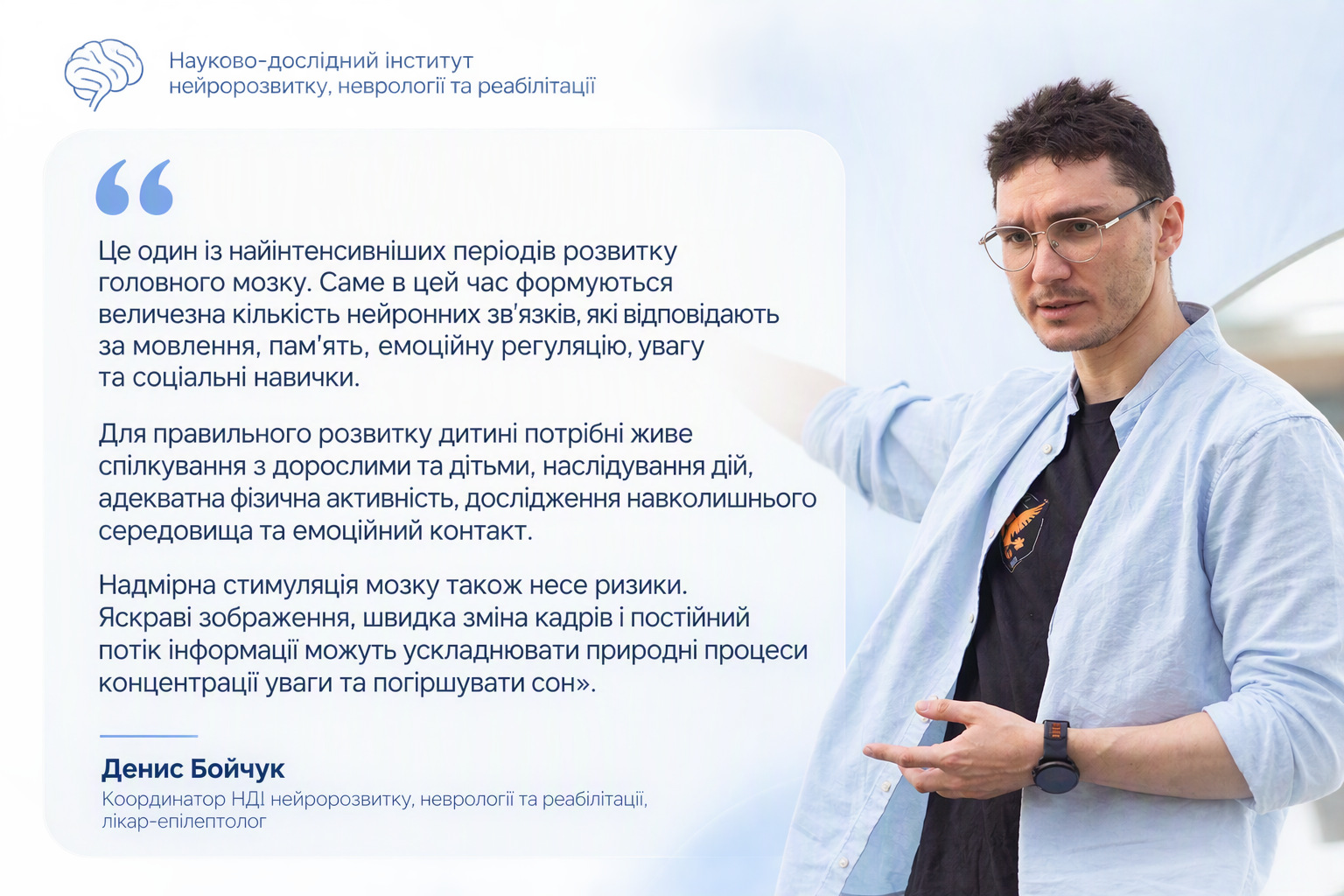
Denys Boichuk, coordinator of the Research Institute of Neurodevelopment, Neurology and Rehabilitation and an epileptologist, explained why the first two years of life deserve special attention:
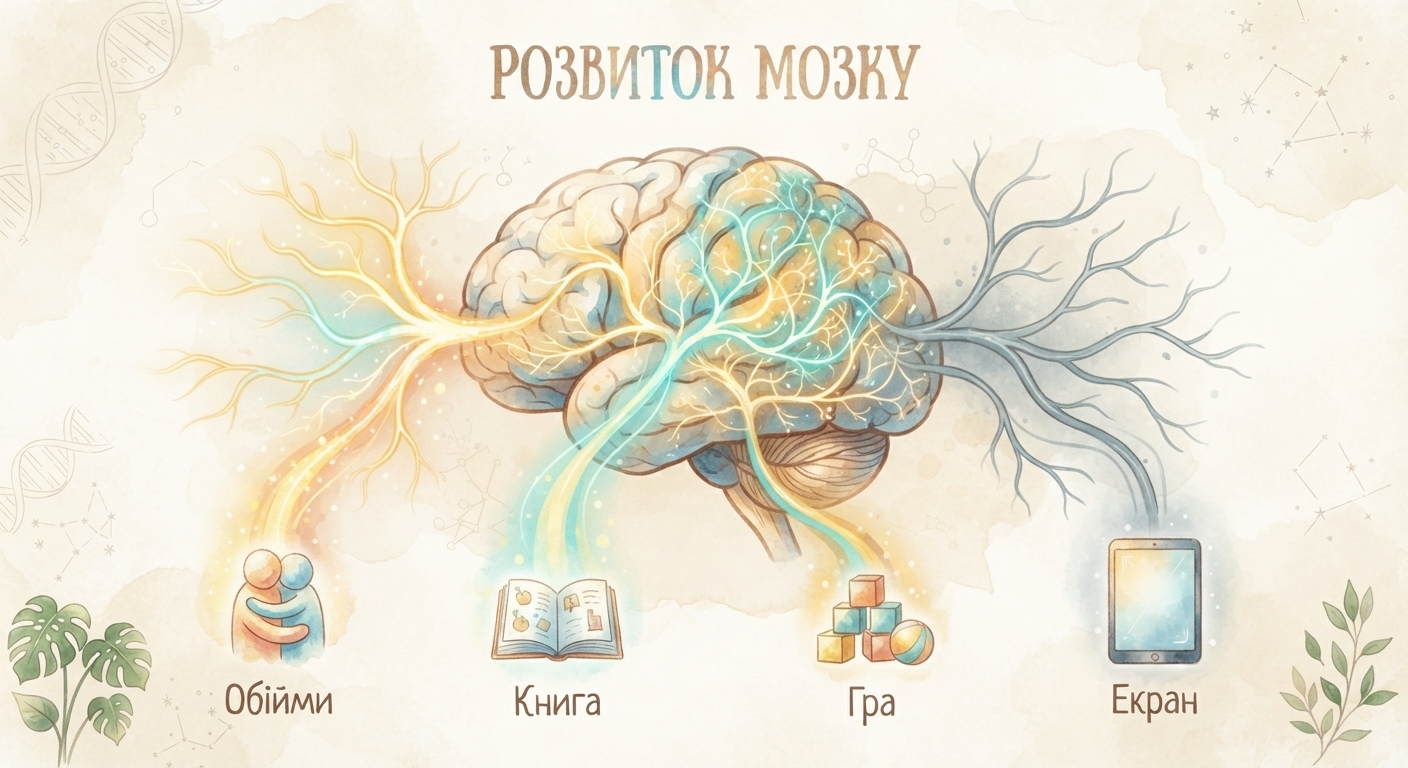
“This is one of the most intensive periods of brain development. It is precisely at this time that a huge number of neural connections form, responsible for speech, memory, emotional regulation, attention and social skills. For proper development a child needs live interaction with adults and children, imitation of actions, adequate physical activity, exploration of the surrounding environment, emotional contact and a response from that environment. Overstimulation of the brain is also a risk. Bright images, rapid scene changes and a constant flow of information can make the natural processes of concentration harder and worsen sleep.”
The study was carried out by British researchers, but the problem is especially acute in Ukrainian families. Under frequent shelling, for many parents the phone becomes a way of keeping the child occupied during a long stay in a shelter or on the way to a safer place.

Digital devices are increasingly becoming a tool for calming children. Infants begin to look for comfort not in contact with their parents but in a smartphone or tablet. According to the authors of the study, this may affect the formation of the child's emotional attachment and behaviour in the future.
Part of the problem is that parents themselves often lack clear guidance on using gadgets. As a result, the constant presence of screens comes to be seen as the norm. This is how parents behave, and children pick up these habits from an early age.
News from the front, work chats, messages from relatives, alarm signals. Many parents unconsciously spend much of their time on the phone even next to their children. Small children quickly absorb this pattern of behaviour and start to see the gadget as the main centre of attention in the family.
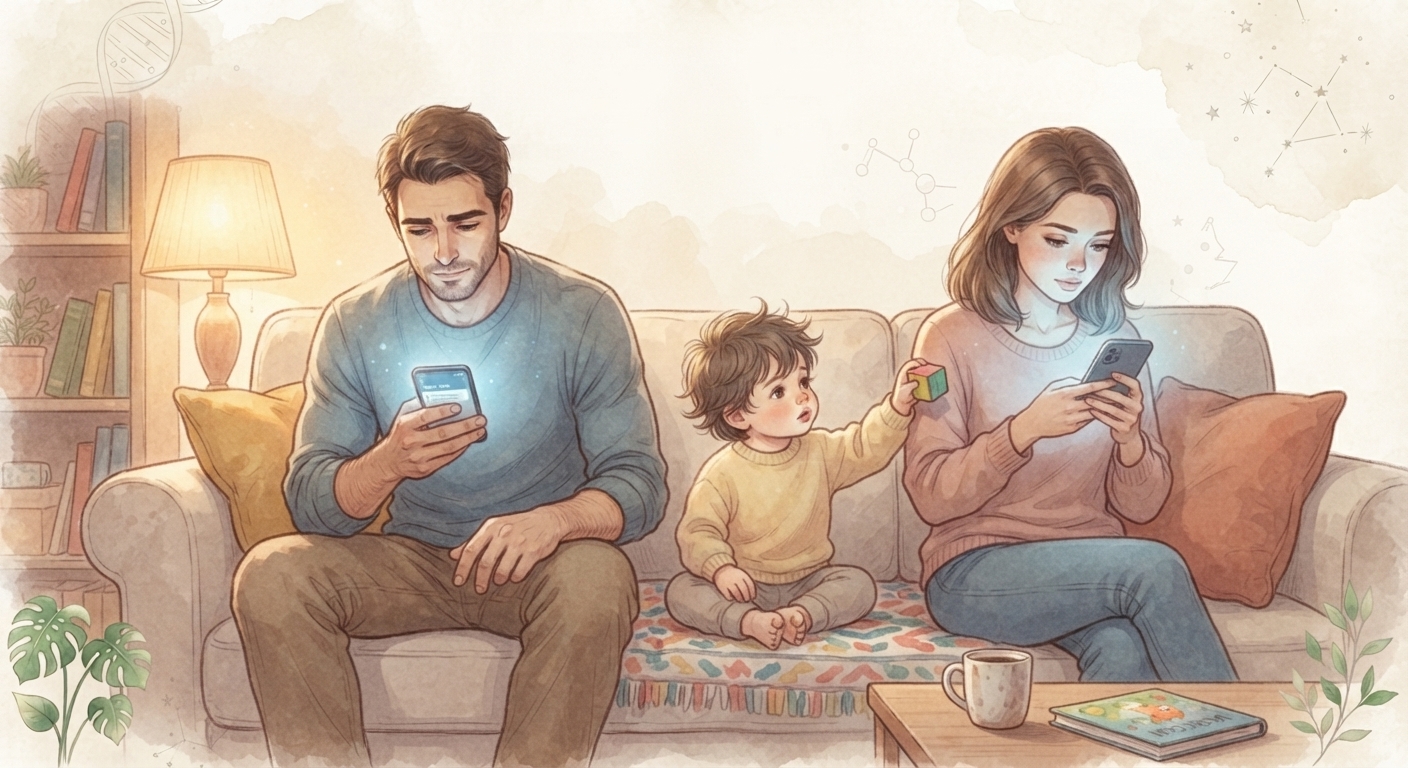
Specialists advise against trying to give up technology entirely and instead recommend setting healthy rules for using it. For children under two, live interaction, active play, walks, reading books and engaging with the world around them should remain the priority. Even the authors of the study admit that it is almost impossible to avoid passive contact with screens in the modern world, but they stress that additional deliberate screen time brings no benefit and only increases the potential risks to a child's development.


In wartime and under constant stress, Ukrainian parents have to find a balance between reality and their child's needs. But precisely now, when gadgets have become an inseparable part of life, it is especially important to remember that the best environment for a young child's development is not smartphones and tablets but communication, care and the presence of loved ones. The conclusion of the British scientists is simple: the first two years of life are decisive for brain development, and no screen can replace a child's live interaction with parents.
As a reminder, a joint Ukrainian-American project of the Research Institute of Neurodevelopment, Neurology and Rehabilitation is under way in Ukraine. One of its main areas is research into the effect of war on the population's health and into neurotrauma. Diagnostics and support for children and adults, and science-based recommendations for parents. Brain examinations are carried out using an electroencephalograph. Terms for veterans are on veterano.info.
Instagram: @nnrrieu, @neuro.hub.eu
Facebook: Research Institute of Neurodevelopment, Neurology and Rehabilitation
LinkedIn: nnrieu
Sources: The Guardian, 1001 Critical Days